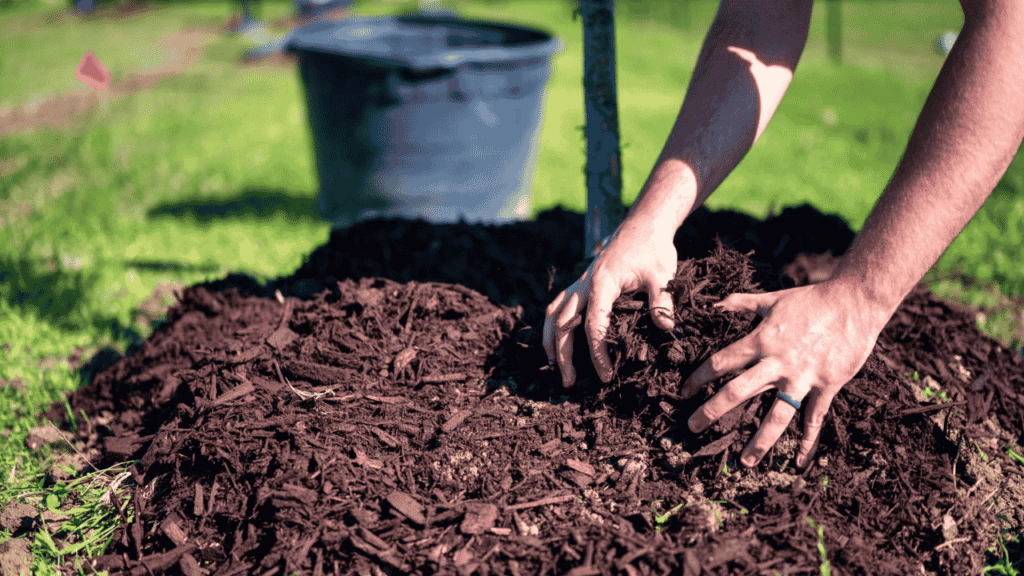
Mulching is an essential agricultural practice that involves covering the soil surface with organic or synthetic materials to improve crop production and conserve resources. It provides multiple benefits, including weed suppression, soil moisture retention, temperature regulation, and soil health improvement. For field crops, vegetables, and orchards, mulching is a cost-effective method to enhance productivity while reducing labor and input costs.
By forming a protective layer over the soil, mulches prevent sunlight from reaching weed seeds, thus reducing weed emergence. They also minimize evaporation, maintaining soil moisture and ensuring crops have adequate water during dry periods. In addition, organic mulches gradually decompose, enriching the soil with organic matter and nutrients, which improves soil structure and fertility over time.
Table of Contents
Overview
| Aspect | Key Focus |
|---|---|
| Weed Control | Suppression of weed growth by blocking sunlight |
| Moisture Conservation | Reducing evaporation and maintaining soil water |
| Soil Temperature | Stabilizing temperature for better root growth |
| Soil Health | Adding organic matter and improving structure |
| Erosion Control | Reducing water and wind erosion |
| Sustainability | Minimizing chemical herbicide use and conserving resources |
Weed Suppression
One of the primary benefits of mulching is effective weed control. Mulch prevents sunlight from reaching the soil surface, which inhibits the germination and growth of weeds. Organic mulches, such as straw, wood chips, or crop residues, also physically block weed emergence, reducing competition for nutrients, water, and light.
By suppressing weeds naturally, mulching reduces the need for herbicides, lowers labor costs, and promotes eco-friendly farming practices. It is especially beneficial in high-maintenance crops and areas prone to fast-growing weed infestations.
Soil Moisture Conservation
Mulching plays a significant role in maintaining soil moisture, particularly in semi-arid and dry regions. A layer of mulch reduces surface evaporation, ensuring water remains available for crop roots. This is critical during dry spells or periods of irregular rainfall, as it enhances drought resilience and minimizes irrigation requirements.
In addition, mulches improve water infiltration by preventing surface crusting, allowing rain or irrigation water to penetrate more effectively into the soil profile.
Soil Temperature Regulation
Mulches help stabilize soil temperature, protecting roots from extreme heat in summer and reducing frost damage in cooler months. Organic mulches act as insulators, maintaining a more consistent temperature in the root zone, which promotes healthy growth, nutrient uptake, and microbial activity.
Temperature regulation also supports early seedling establishment, leading to improved crop vigor and uniform growth.
Enhancing Soil Health
Organic mulches gradually decompose and release organic matter and nutrients into the soil, improving its fertility and structure. This increases soil porosity, enhances microbial activity, and promotes beneficial organisms that support nutrient cycling and disease suppression.
Over time, mulching improves soil aggregation, water retention, and cation exchange capacity, making the soil more resilient and productive for future crops.
Erosion and Environmental Benefits
Mulches protect the soil from water and wind erosion by reducing the impact of raindrops on bare soil and preventing topsoil loss. By preserving soil structure, mulching enhances sustainability and minimizes nutrient depletion.
Furthermore, by reducing weed growth and water requirements, mulching helps decrease chemical herbicide and water usage, promoting environmentally friendly farming practices.
Integration Into Crop Management
Mulching can be integrated into various crop management systems, including row crops, orchards, and vegetable beds. Selection of mulch type—organic (straw, leaves, wood chips) or synthetic (plastic films)—depends on crop type, local climate, and resource availability. Proper thickness and timely application maximize weed suppression, moisture retention, and soil benefits.
Combining mulching with other conservation practices, such as cover crops and reduced tillage, further enhances soil health and resource efficiency.
The Bottom Line
Mulching is a practical and sustainable strategy for weed control, soil moisture conservation, and overall soil health improvement. By providing a protective layer, it reduces weed competition, stabilizes soil temperature, conserves water, prevents erosion, and enhances fertility through organic matter incorporation. Implementing mulching in crop production systems improves yield, reduces input costs, and supports environmentally friendly farming practices, making it a vital tool for sustainable agriculture.