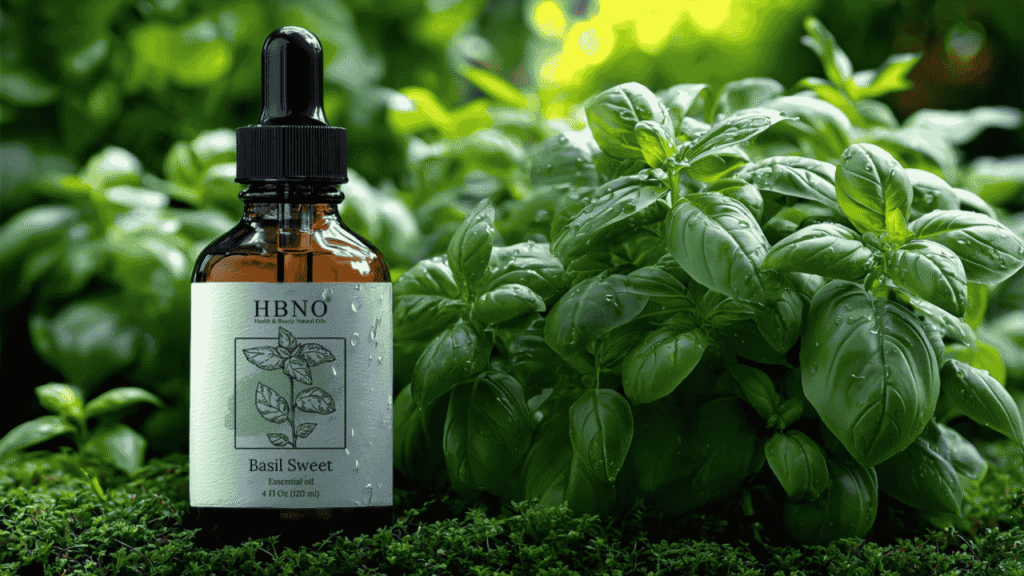
Basil (Ocimum spp.) is a widely cultivated aromatic herb valued for its essential oils, which are used in culinary, medicinal, and cosmetic applications. Essential oil yield varies significantly among basil varieties due to genetic factors, environmental conditions, and cultivation practices. Evaluating essential oil content across varieties helps farmers and producers select high-yielding types for commercial production and ensures consistent quality for industrial use.
Understanding the factors affecting essential oil yield is crucial for optimizing harvesting strategies, post-harvest processing, and breeding programs. Varietal differences, along with plant maturity, climate, and soil fertility, determine both the quantity and chemical composition of the extracted oils.
Table of Contents
Basil Varieties and Oil Yield
| Basil Variety | Average Oil Yield (%) | Key Oil Components |
|---|---|---|
| Sweet Basil | 0.5–1.0 | Linalool, eugenol |
| Genovese Basil | 0.7–1.2 | Linalool, eugenol, methyl chavicol |
| Holy Basil (Tulsi) | 0.4–0.8 | Eugenol, methyl eugenol |
| Purple Basil | 0.3–0.7 | Anthocyanins, eugenol |
| Lemon Basil | 0.5–1.0 | Citral, limonene |
Varietal Differences
Different basil varieties exhibit distinct essential oil profiles and yields. Sweet basil is popular for its balanced aroma and moderate oil yield, making it suitable for culinary use. Genovese basil is highly prized for its higher oil content and flavor intensity. Holy basil (Tulsi) is valued in traditional medicine for its bioactive compounds, while lemon and purple basil have unique aromatic profiles for niche markets.
Genetic factors influence gland density, leaf size, and biosynthetic pathways, which determine oil accumulation. Understanding varietal traits helps growers choose types that meet both yield and quality requirements for their intended applications.
Influence of Cultivation Practices
- Soil Fertility: Well-drained, nutrient-rich soils promote vegetative growth and increase oil content.
- Irrigation: Moderate water supply ensures optimal plant health, while overwatering can dilute oil concentration.
- Sunlight: Full sun exposure enhances photosynthesis and secondary metabolite production, boosting essential oil yield.
- Spacing and Density: Adequate spacing prevents shading, allowing uniform growth and maximizing leaf biomass.
Implementing optimal cultivation practices is key to enhancing both essential oil yield and quality in basil crops.
Stage of Harvesting
Essential oil concentration in basil varies with plant maturity. Generally, the highest yield is obtained during full flowering, when glandular trichomes are fully developed. Early harvesting may produce lower oil content, while delayed harvesting can lead to decreased oil quality due to leaf senescence or environmental stress.
Harvesting strategy also affects the chemical composition of oils. For instance, linalool content peaks at different stages depending on the variety, influencing flavor and medicinal properties.
Extraction Techniques
- Steam Distillation: Most common method, suitable for large-scale essential oil extraction.
- Hydrodistillation: Traditional method for laboratory-scale extraction and chemical analysis.
- Solvent Extraction: Used to extract specific aromatic compounds for niche applications.
- Cold Pressing: Rarely applied for basil, but suitable for delicate volatile compounds.
The extraction method affects oil yield, purity, and chemical profile, and must be matched to the basil variety and intended use.
Environmental Factors
Temperature, humidity, and altitude influence essential oil accumulation. Warm climates with adequate sunlight generally favor higher oil content. Stress conditions, such as moderate drought, can sometimes increase secondary metabolite production, enhancing oil concentration. However, extreme stress may reduce biomass and overall yield.
Understanding environmental impacts allows growers to adjust planting times, select suitable varieties, and implement management practices that optimize oil yield.
Applications and Economic Importance
High-yielding basil varieties support commercial essential oil production for culinary, pharmaceutical, cosmetic, and aromatherapy purposes. Selecting varieties with consistent oil content ensures quality standards and market competitiveness. Additionally, high-value essential oils contribute to farm profitability by providing an additional income stream from aromatic crops.
By combining varietal selection, cultivation best practices, and optimal harvest timing, producers can maximize both yield and oil quality, meeting industrial and consumer demands effectively.
Last Words
Essential oil yield in basil varies widely among different varieties due to genetic, environmental, and management factors. Understanding these influences is critical for selecting suitable varieties, optimizing cultivation practices, and achieving high-quality oil production. Strategic planning of growth conditions, harvest timing, and extraction methods ensures maximum yield, consistent chemical composition, and economic benefits for farmers and industries relying on basil essential oils.