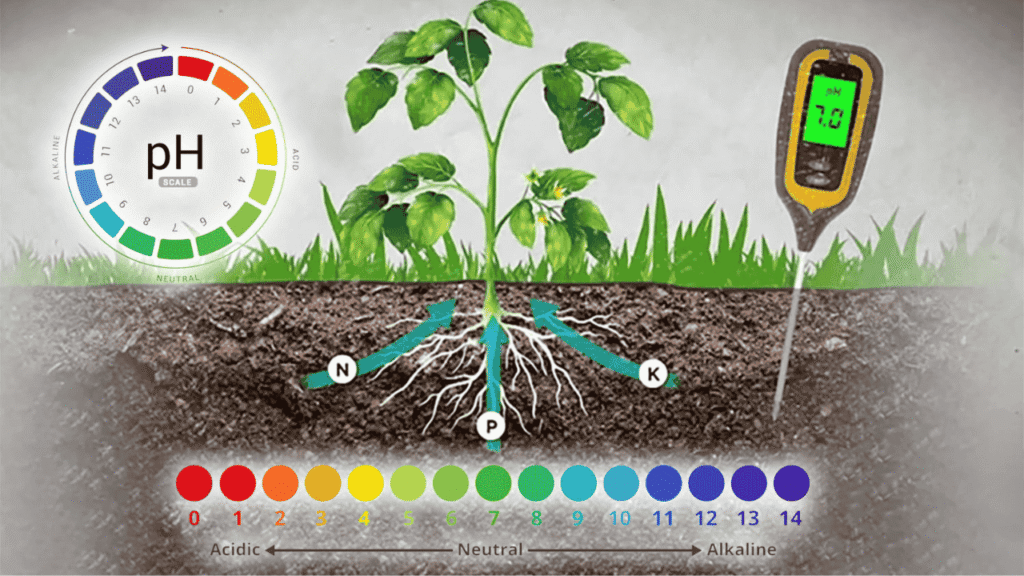
Soil pH is a key factor influencing the growth, nutrient availability, and bioactive compound production in medicinal herbs. It determines the solubility of essential nutrients and affects microbial activity in the rhizosphere, which in turn impacts plant health and productivity. Understanding the effect of soil pH is essential for optimizing the cultivation of medicinal herbs for both pharmaceutical and culinary applications.
Medicinal herbs such as basil, rosemary, mint, and chamomile have specific pH preferences that support optimal growth and secondary metabolite accumulation. Deviations from their ideal pH range can lead to nutrient deficiencies, reduced biomass, and lower concentrations of medicinal compounds.
Table of Contents
Soil pH Effects
| Herb | Preferred Soil pH | Growth Effect | Active Compound Impact |
|---|---|---|---|
| Basil | 6.0–7.0 | Optimal leaf growth and biomass | Higher essential oil content |
| Rosemary | 6.0–7.5 | Enhanced root and shoot development | Increased antioxidant compounds |
| Mint | 6.0–7.5 | Vigorous growth and spread | Better menthol and flavonoid levels |
| Chamomile | 6.0–7.0 | Flowering and plant height improved | Higher apigenin content |
| Thyme | 6.0–7.0 | Strong stem and leaf growth | Improved thymol and carvacrol levels |
Influence on Nutrient Availability
Soil pH affects the solubility and uptake of key nutrients such as nitrogen, phosphorus, potassium, calcium, and magnesium. In acidic soils (pH <6.0), nutrients like phosphorus and molybdenum become less available, while toxic metals like aluminum and manganese may reach harmful levels. Alkaline soils (pH >7.5) can reduce the availability of iron, zinc, and manganese, causing nutrient deficiencies.
Optimal soil pH ensures balanced nutrient uptake, supports healthy growth, and maintains the biosynthesis of secondary metabolites in medicinal herbs.
Impact on Growth and Biomass
- Acidic Soils: Reduced leaf expansion, stunted root growth, and lower biomass accumulation.
- Neutral to Slightly Alkaline Soils: Promotes robust root and shoot development, improved branching, and higher yield.
- Excessive Alkalinity: May limit germination, nutrient absorption, and overall plant vigor.
- Species-Specific Response: Different herbs tolerate pH variations differently; for example, rosemary prefers slightly alkaline conditions, while basil thrives in neutral soil.
Managing soil pH within the preferred range for each species maximizes biomass production and harvestable yield.
Effect on Bioactive Compounds
Soil pH influences the production of secondary metabolites such as essential oils, phenolics, flavonoids, and alkaloids. Herbs grown in optimal pH conditions tend to produce higher concentrations of bioactive compounds, enhancing medicinal and culinary value.
For instance, basil grown at pH 6.5–7.0 accumulates more linalool and eugenol, while rosemary produces higher rosmarinic acid and carnosic acid under slightly alkaline conditions. Maintaining ideal pH is therefore crucial for maximizing therapeutic potential.
Soil Management Strategies
- Liming Acidic Soils: Applying lime raises pH, reduces aluminum toxicity, and improves nutrient availability.
- Sulfur or Acidifying Fertilizers: Used to lower pH in alkaline soils to enhance micronutrient uptake.
- Regular Soil Testing: Ensures accurate monitoring and adjustment of pH levels.
- Organic Amendments: Compost and green manure improve soil structure, buffer pH, and support microbial activity.
Adopting proper soil management practices ensures consistent growth and high-quality medicinal herbs.
Environmental and Microbial Interactions
Optimal pH promotes beneficial microbial activity, which supports nutrient cycling and enhances plant resilience. Soil microbes contribute to nitrogen fixation, phosphorus solubilization, and production of growth-promoting substances. Deviations from the ideal pH can disrupt microbial balance, reducing nutrient availability and plant health.
Maintaining appropriate soil pH aligns herb growth with soil ecological health, supporting sustainable cultivation practices.
Wrapping Up
Soil pH is a fundamental factor determining the growth, yield, and bioactive compound content of medicinal herbs. Maintaining a neutral to slightly acidic or alkaline soil, depending on the species, ensures optimal nutrient availability, robust biomass accumulation, and high-quality secondary metabolites. Through careful monitoring, liming or acidification, and organic amendments, growers can optimize soil conditions for medicinal herb cultivation, improving productivity, therapeutic value, and sustainability in herbal farming systems.