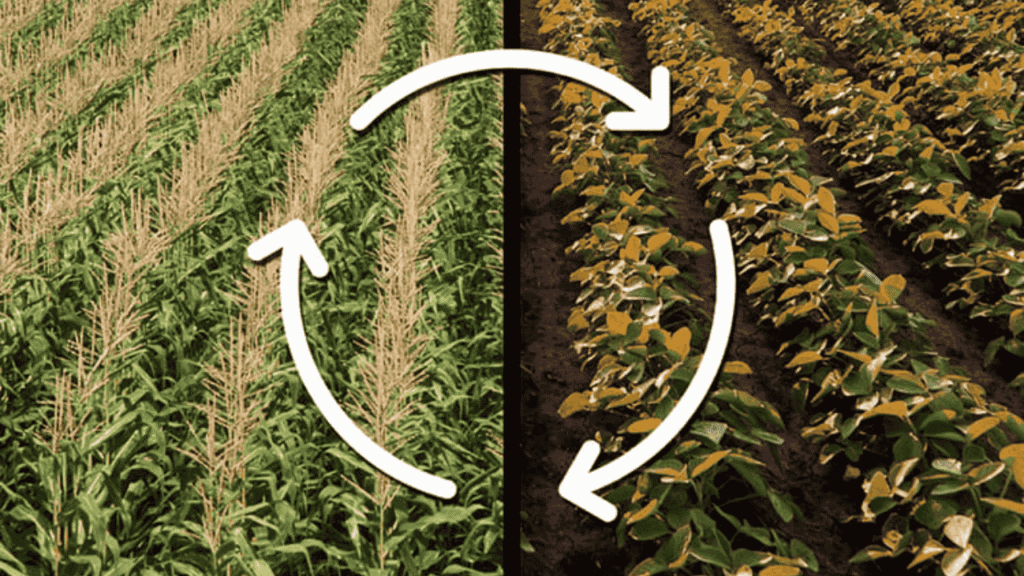
Crop rotation is a fundamental agricultural practice that involves growing different types of crops sequentially on the same land over time. This method helps maintain soil fertility, reduces pest and disease buildup, and improves crop yield. In modern agriculture, crop rotation is recognized as a sustainable strategy for enhancing productivity while preserving the ecological balance of farmland.
In addition to increasing nutrient availability, crop rotation promotes soil structure improvement, encourages beneficial microbial activity, and reduces reliance on chemical fertilizers. Implementing proper rotation sequences can also mitigate risks associated with monoculture, such as soil degradation, nutrient depletion, and pest resistance, ensuring long-term farm sustainability.
Table of Contents
Overview
| Aspect | Key Focus |
|---|---|
| Soil Fertility | Maintaining nutrient balance and organic matter |
| Yield Improvement | Enhanced productivity and crop quality |
| Pest & Disease Control | Reducing pathogen buildup naturally |
| Soil Structure | Improving aeration, water retention, and porosity |
| Sustainability | Reducing chemical input and environmental impact |
| Crop Selection | Strategic sequence of legumes, cereals, and root crops |
Soil Fertility Benefits
Crop rotation significantly improves soil fertility by maintaining the balance of essential nutrients. Different crops have varying nutrient requirements and contributions; for example, leguminous crops such as beans or peas fix atmospheric nitrogen, enriching the soil for subsequent crops.
Rotating crops prevents nutrient depletion commonly associated with continuous monoculture, where the same crop repeatedly draws the same nutrients from the soil. This practice reduces the need for synthetic fertilizers, lowers production costs, and enhances soil health over time.
Yield Improvement
A well-planned crop rotation schedule can increase crop yield by creating favorable soil conditions and reducing biotic stress. Crops grown after nitrogen-fixing plants often exhibit better growth, higher biomass, and improved grain quality.
Additionally, alternating deep-rooted and shallow-rooted crops enhances soil aeration and water infiltration, promoting healthier plant development. Studies have shown that rotations with legumes and cereals can increase yield potential by 10–25% compared to continuous monoculture systems.
Pest and Disease Management
Continuous cropping of a single crop can lead to pest and disease buildup, reducing productivity and requiring more chemical interventions. Crop rotation disrupts pest life cycles and minimizes pathogen proliferation naturally.
For instance, rotating cereal crops with legumes or root crops reduces the prevalence of cereal-specific pests and soil-borne diseases, lowering the dependence on pesticides and promoting environmentally friendly farming practices.
Soil Structure Improvement
Different crops impact soil structure in unique ways. Deep-rooted crops improve porosity and drainage, while surface-covering crops protect against erosion and compaction. Rotating crops with varying root systems enhances soil aggregation, water retention, and nutrient cycling.
Improved soil structure supports better seed germination, root penetration, and overall plant growth, directly influencing yield and long-term soil health.
Sustainability Advantages
Crop rotation contributes to sustainable agriculture by reducing chemical fertilizer and pesticide use, conserving soil fertility, and enhancing biodiversity. It also mitigates the environmental impact of farming, such as nutrient runoff and soil erosion, which are common in monoculture systems.
Incorporating cover crops and legumes in rotations further promotes organic matter accumulation, water conservation, and carbon sequestration, supporting climate-resilient farming practices.
Crop Selection and Rotation Planning
Effective rotation depends on strategic crop selection. A common rotation pattern involves alternating cereals, legumes, and root crops. Key considerations include:
- Legumes for nitrogen fixation
- Cereal crops for staple production
- Root crops for soil aeration and organic matter addition
Farmers must also consider crop duration, nutrient requirements, and local climate conditions to develop rotation schedules that maximize soil fertility and yield.
Impact on Farm Productivity
Crop rotation has a long-term positive effect on farm productivity. By enhancing nutrient cycling, controlling pests, and improving soil structure, rotations allow farmers to achieve higher and more stable yields over successive seasons.
Moreover, reduced reliance on chemical inputs lowers production costs and supports economically viable and environmentally responsible farming.
Final Thoughts
Crop rotation is a proven practice that enhances soil fertility, improves yield, manages pests and diseases, and promotes sustainable agriculture. By strategically alternating crops based on nutrient needs, root structures, and ecological benefits, farmers can maintain healthy soils, reduce chemical inputs, and achieve consistent, high-quality harvests. Implementing effective rotation plans is essential for long-term productivity, environmental protection, and the overall resilience of agricultural systems.