Wheat is a staple crop worldwide, but in semi-arid regions, limited rainfall and high evaporation rates pose major challenges for farmers. Efficient irrigation is essential to maintain productivity, conserve water, and support sustainable agriculture. Optimizing irrigation practices involves selecting the right methods, scheduling water applications, monitoring soil moisture, and integrating sustainable techniques to improve both yield and resource use.
In semi-arid climates, water stress during critical growth stages can significantly reduce wheat yield and quality. Applying irrigation at the right time and in the right amount allows crops to thrive, minimizes wastage, and ensures long-term soil health. Science-based irrigation strategies are crucial for improving agricultural resilience in these water-limited regions.
Table of Contents
Overview
| Aspect | Key Focus |
|---|---|
| Water Management | Scheduling and quantity optimization |
| Irrigation Methods | Drip, sprinkler, and surface systems |
| Soil Moisture Monitoring | Sensors and manual assessment |
| Growth Stage Needs | Targeted irrigation for critical periods |
| Crop Yield | Maximizing production with minimal water use |
| Sustainability | Conserving water and preventing soil degradation |
Water Management
Effective water management is the foundation of irrigation optimization. Farmers should calculate crop water requirements based on soil type, climate, and seasonal rainfall. Scheduling irrigation for critical growth stages—tillering, flowering, and grain filling—ensures crops receive sufficient moisture when it most impacts yield.
Proper water management avoids over-irrigation, which can lead to waterlogging, nutrient leaching, and wasted resources. Understanding soil properties, such as water retention capacity, helps in determining the frequency and amount of irrigation needed for different wheat fields.
Irrigation Methods
Choosing the right irrigation method is vital for efficiency and crop performance. Common systems include:
- Drip Irrigation: Delivers water directly to the root zone, reducing evaporation and runoff. Highly efficient for water-scarce areas.
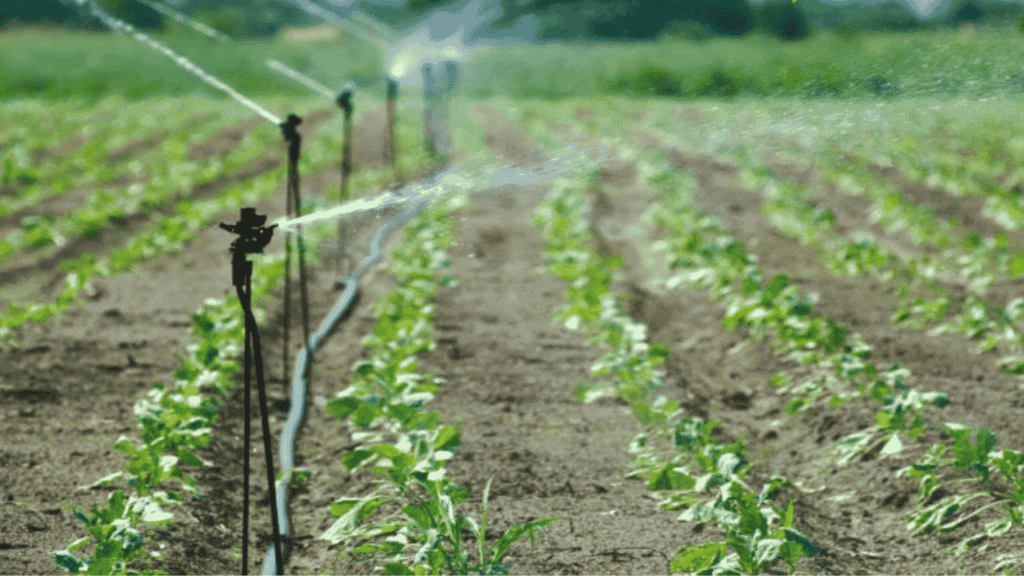
- Sprinkler Irrigation: Distributes water evenly across the field, simulating natural rainfall. Suitable for varied terrain but may experience evaporation losses.
- Surface Irrigation: Traditional flooding or furrow irrigation. Requires careful leveling to minimize water wastage and soil erosion.
Farmers may combine methods based on terrain, water availability, and cost to achieve optimal results.
Soil Moisture Monitoring
Monitoring soil moisture is crucial for timely irrigation. Tools range from manual soil probes to digital sensors that measure moisture at various depths.
Maintaining optimal soil moisture prevents water stress during critical growth stages, supports healthy root development, and minimizes nutrient leaching. Advanced monitoring allows farmers to apply water efficiently, saving resources while ensuring consistent crop growth.
Growth Stage Needs
Wheat requires varying water levels depending on its growth stage:
- Tillering: Moderate water supports root and stem development.
- Flowering: High water is essential for grain formation.
- Grain Filling: Adequate moisture improves kernel size and overall yield.
Targeting irrigation to these stages ensures maximum efficiency, conserving water while maintaining high productivity.
Crop Yield Improvement
Optimized irrigation enhances wheat yield by improving root development, nutrient uptake, and photosynthesis. Proper water management reduces crop stress, mitigates drought and heat effects, and prevents soil degradation.
Consistent irrigation during key stages leads to higher grain weight, better quality, and more stable production even under semi-arid conditions, contributing to both food security and farmer income.
Sustainability Practices
Sustainability is critical in semi-arid agriculture. Strategies include:
- Rainwater Harvesting: Collecting and storing rainwater for supplemental irrigation.
- Minimal Tillage: Preserves soil structure and reduces evaporation.
- Mulching: Conserves soil moisture and regulates temperature.
- Technology Integration: Automated irrigation systems and moisture sensors enhance water use efficiency.
These practices reduce water wastage, protect soil health, and improve long-term agricultural sustainability.
Impact and Outcomes
Implementing optimized irrigation practices has led to improved wheat yields, efficient water use, and enhanced farm profitability. Farmers report better crop performance, healthier soils, and reduced stress on water resources. Semi-arid regions adopting these strategies can achieve more consistent production and resilience against climate variability.
Educational outreach, demonstration plots, and technology adoption have further accelerated the positive impact, helping farmers make data-driven decisions to optimize irrigation.
Summing Up
Optimizing irrigation for wheat in semi-arid regions is essential for maximizing yield, conserving water, and promoting sustainable farming. By managing water efficiently, selecting appropriate irrigation methods, monitoring soil moisture, and targeting critical growth stages, farmers can achieve high productivity while minimizing resource use. Integrating sustainable practices and technology further enhances resilience, enabling semi-arid regions to meet food demand and maintain long-term agricultural sustainability.